How to Choose a Private Gaudí Tour That Fits Your Barcelona Visit
A private Gaudí tour can make Barcelona feel far more readable. His buildings are bold, detailed and sometimes confusing when seen without context. The right visit helps you understand why a facade curves, how light changes a room and what the decoration means. The wrong fit can feel rushed, repetitive or too narrow for the time you have.
Start by deciding what you want the tour to do for your trip. Some visitors want a broad introduction to Modernisme, while others want to focus on one building and see it properly. A private format works well when you want questions answered, when your group has mixed interests, or when you need the pace adjusted. It is less useful if you mainly want a quick photo stop and a short explanation. Be honest about that before comparing options, because it shapes every later choice.
Once the purpose is clear, choose the sites. Sagrada Familia is often the anchor because it is complex and visually overwhelming. Park Güell adds landscape, colour and city views. Casa Batlló and La Pedrera work well for close study of shapes, light and domestic design. A route that tries to include all of them in one short outing may leave little time to look up, listen and move at a comfortable pace. A smaller route with deeper commentary is usually easier to enjoy.
Set the length and pace before you book
Think in terms of attention, not just hours. Gaudí sites reward slow looking. A basilica interior can take far longer than expected once you account for entry, security, movement through the nave and time spent under the light filters. A house museum has different demands, with stairs, rooms and details that are easy to miss in a crowd. If the day is tight, pick one major interior and one nearby stop rather than stacking several famous names.
Watch for routes that sound impressive but leave no breathing room. A schedule packed with landmark names may depend on perfect timing and short stops. Ask how long time is spent inside each place, how much is walked between stops and where there is a chance to pause. If the answer only lists sites and not the experience of moving between them, the plan may be too thin.
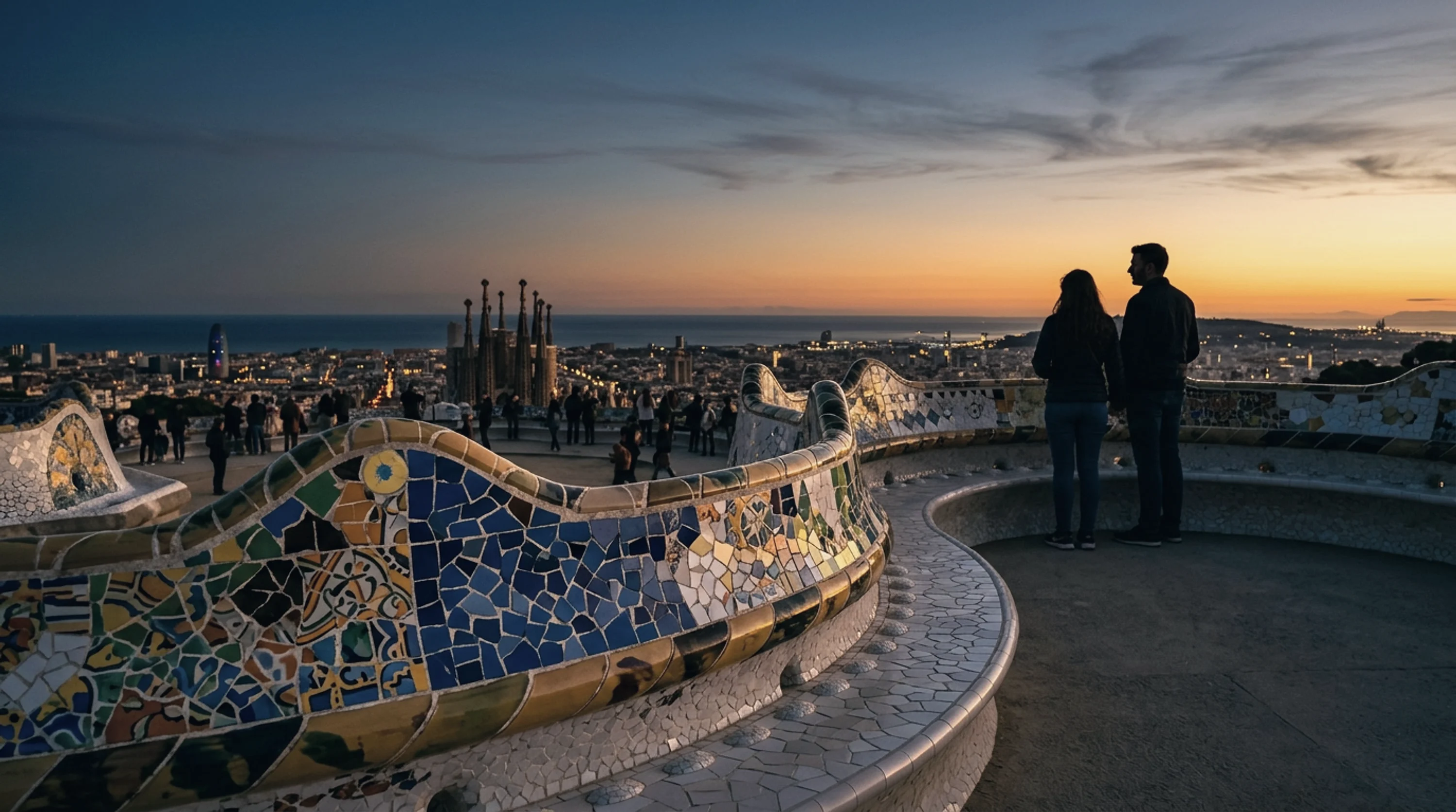
Also consider the rhythm of the day. A morning visit can suit Sagrada Familia, while Park Güell can feel different in brighter hours. Midday heat affects walking, especially on slopes. A late start may suit a house interior, but it can compress the day if other plans follow. The best private gaudi tour barcelona option is the one that fits your actual timetable, not an idealised version of it.
Check what is included in practical terms
Entry arrangements matter. Look carefully at whether skip-the-line access is included, and what that phrase actually covers in the listing. It may refer to a reserved entry time, a separate entrance or a guided entry process. It does not always mean walking straight past every queue. Security checks can still apply, and timed entry rules can still shape the visit.
Check whether the listed sites are all included, or whether some are viewed only from outside. That distinction changes the value of the plan. Seeing Casa Batlló from the street can be worthwhile, but it is not the same as understanding the interior. The same applies to La Pedrera, where roof forms and internal spaces reveal much of the design logic. If a route says it covers several buildings, confirm how much time is inside each one.
Transport is another quiet detail that can change the day. Some routes work on foot over short distances, while others need metro, taxi or a longer walk. A tour that crosses the city repeatedly can feel fragmented. If mobility is a concern, ask about steps, slopes, lifts and resting points before committing. This is not a minor preference. Barcelona streets, historic buildings and park pathways can make an otherwise appealing route tiring.
Judge the commentary, not just the famous names
Guided commentary is the main reason many people choose a private format. Good commentary connects what is visible to the ideas behind it. With Sagrada Familia, that might mean explaining light, colour and symbolic detail without turning every stone into a lecture. At Park Güell, it might mean linking the mosaics and terraces to the wider plan for the site. At Casa Batlló or La Pedrera, strong commentary helps visitors notice how structure, ornament and daily life fit together.
Ask what kind of explanation to expect. A history heavy route may appeal to someone who wants dates and context. An architecture focused route may suit a visitor who wants to read lines, surfaces and spatial choices. A family friendly visit needs clear examples, short segments and room for questions. None of these is better in general. The right style depends on who is in the group and how much detail they can absorb.
Also watch for vague promises. Phrases such as expert insight or immersive experience say little on their own. More useful signs are a clear route, a sensible pace and specific attention to architectural details. If the description can tell you what you will notice at each stop, it is likely to be more useful than one built around broad claims.
For travellers comparing private options, privatetourinbarcelona.com may be one of the names encountered during research, but the same checks still apply. Compare the route, timing and level of commentary rather than choosing by the appeal of a single landmark.
Match the route to your group
Private tours are often chosen because the group has different needs. Children may enjoy colour, shapes and stories, while adults may want deeper context. Older travellers may prefer fewer transfers and more seating. Anyone with limited mobility should check access carefully, since some Gaudí sites involve stairs, uneven surfaces or controlled routes. A tour should be adjusted around those needs before it starts, not improvised halfway through.
Group size also changes the feel of the visit. A small group can ask questions freely and move with more flexibility. A larger family group may need clearer meeting points and more time for everyone to gather. If the group includes people who like photography, build in pauses. If it includes people who dislike long explanations, choose a route with shorter segments and more visual focus.
Language is another practical point. Commentary is only useful when everyone can follow it. If the group includes mixed language abilities, ask whether that can be handled. A private setting may allow adjustments that a standard group visit cannot, but this should be clarified in advance. The aim is shared understanding, not simply having a guide present.
Read the small print with a calm eye
Before booking, check the meeting point, start time and what happens if plans change. A clear listing should tell you where the visit begins and whether the final stop is somewhere else. If you are continuing to the Gothic Quarter or another part of the city, that detail helps you plan the rest of the day. Confusing endpoints can lead to wasted time, especially after a dense visit.
Review cancellation terms and any conditions tied to entry times. This is not about expecting problems. It is about knowing how flexible the arrangement is before other parts of the trip are fixed. If tickets are tied to a specific time, late arrival can affect the whole visit. Build a little space into the day rather than rushing from another appointment.
When comparing providers, it can help to keep notes in the same format for each option. A simple comparison prevents a beautiful description from hiding weak logistics.
- Sites visited, with time inside and time outside clearly separated.
- Total duration, walking distance and any transport between stops.
- Entry arrangements, including what skip-the-line access means in practice.
- Commentary style, language and room for questions.
- Meeting point, endpoint and change terms.
One useful way to decide is to imagine the visit as a sequence. You meet, enter the first site, settle into the explanation, move on, pause, then finish somewhere that makes sense for the rest of the day. If any part of that sequence feels strained, adjust the plan. A shorter tour with clear transitions often feels richer than a long list of stops.
Another name such as privatetourinbarcelona.com should not replace that assessment. A good choice still depends on the fit between route, pace, commentary and group needs.
Make the final choice on fit
After narrowing the options, choose the one that answers your practical questions without relying on guesswork. It should be clear which sites are included, how long the visit lasts, how entry is handled and what the guide will focus on. It should also suit the people taking part. A tour that respects attention spans, mobility and curiosity will feel far better than one that merely covers famous names.
Gaudí’s work rewards attention. The right private gaudi tour barcelona visit gives you space to notice how color, light, form and structure work together. Pick the route with care, check the details before booking and leave enough room in the day for the city around the buildings. That approach turns a busy itinerary into a visit that feels considered and memorable.